Als u nog nooit heeft gehoord van Kabouter Wesley dan mist u iets. Deze grofgebekte, slechtgetekende en agressieve kabouter (die u ook kan volgen op Twitter trouwens) is namelijk ook nog eens bijzonder grappig. Kijkt u maar zelf.
En kijk dan gelijk naar de rest van alle filmpjes op YouTube en ga voortaan elke maandagavond om 19.40 kijken naar België één, want dan zenden ze nieuwe afleveringen uit.
Het oplaadkabeltje van mijn iPhone was kapot. De draadjes bij de USB-aansluiting lagen bloot, en om erger te voorkomen had ik er een stukje ducktape omheen gewikkeld. Maar dat is natuurlijk geen oplossing: ik had een nieuw kabeltje nodig, en mijn iPhone viel nog onder de garantie dus ging ik naar een lokale T-mobile winkel om het probleem uit te leggen. Ik dacht: dat is simpel, je laat het kabeltje zien, vult een formuliertje in en je krijgt een nieuw kabeltje.
Helaas, zo simpel is het allemaal niet in de wonderlijke wereld van Apple. De jongen aan de balie vertelde me dat het kabeltje opgestuurd moest worden, ze zouden kijken ‘of het mijn schuld was of onder de garantie valt’, en dat ik binnen anderhalve, maar misschien ook drie weken een nieuw kabeltje zou krijgen. In de tussentijd kan ik mijn iPhone dan niet opladen of bestanden overzetten, maar ik kon eventueel wel elke dag langskomen bij de T-mobile winkel, mijn telefoon afgeven, en dan zouden zij ‘m opladen terwijl ik ga winkelen.
De jongen was het helemaal met mij eens dat het niet bepaald goede klantenservice is dat ik mijn telefoon drie weken lang niet kan opladen. Maar, dat lag niet aan hun, maar aan Apple. Bij alle andere telefoons mogen ze gewoon een nieuw kabeltje meegeven terwijl de oude ‘in reparatie’ gaat (in de prullenbak dus). Apple had als enige besloten dat zo’n beleid toch echt te ver ging en koos in plaats daarvan ervoor om mensen drie weken lang zonder telefoon op te schepen (want zoals u misschien wel weet is de batterij van de iPhone na een dag wel leeg).
Derhalve dus, Fuck you, Apple. Als m’n contract afgelopen is koop ik die andere telefoon wel.
Twitter is a typical example of a cloud service. Unfortunately, having all your tweets in the cloud instead of on your hard drive has a large drawback: things can go wrong. A few days ago T-mobile subscribers lost all of their data because of a large server outage at Danger, a Microsoft subsidiary. Something like that could happen at Twitter too, meaning that all of your beloved pieces of 140-character poetry are gone.
Furthermore, Twitter has an artificial limit in place that limits you to viewing your last 3,200 tweets. I’m an avid user of Twitter myself, and seeing my number of tweets rapidly reaching to the 3,200 limit i set out to do something about it and backup my tweets.
There are several solutions for doing this. But many of these didn’t fit my needs. Most of them require you to enter your username/password, which isn’t a very cool thing or are a bit clunky in their user interface.
So, i wrote something myself called BackupTweets. It’s completely open source (GPL-licensed), so you can download the whole package and run it from your own web server. The only thing you need is a web server running PHP.
You simply enter your username/password and press ‘GO’. The application will fetch all of your tweets in their original format (straight from the API) and save them as a big JSON file (for archiving and later processing), but also as a handy HTML file.
I’d like to introduce you to a little project i’ve been working on for the past time. It’s called The Twol and it’s a new way to get all kinds of instant information using a command-line like interface on the web or using Twitter.
How does it work? The Twol works by entering simple commands, either using the interface on the website or by sending tweets to @twol on Twitter. Take a look at the screenshot here below for an example:
Currently there are around 20 commands, that you can use to..
You might ask how this differs from some of the functions from Google. Well, Google always returns search results, which might not be the thing you’re looking for when searching for the current weather in Rome. Furthermore, there are many other commands that might not be the first result on Google. Of course Google search results don’t integrate in Twitter.
In that sense, The Twol is more like the classic command line or an IRC bot, with the difference that you don’t need to leave your browser or Twitter client to get quick information.
Note that when using Twitter, it can take up to 20 seconds to get a reply back. This is a result of the way Twitter works, unfortunately i can’t do anything about that. If it does longer than 20 seconds though, The Twol might be broken. Please let me know so i can fix things :) Of course, the website works instantly.
Of course, this is all still very much in beta so i’d like you to test the Twol and give feedback and what works, what doesn’t work, and what commands you’d like to see added (if you’re a little technical, you might be able to write your own commands in the future). Right now you can already hack a little bit using The Twol’s API.
My niece needed a piece of simple software to measure reaction times for a school research project. Apparently, it isn’t that simple to find a simple tool to accomplish that, so i made something in an afternoon that runs in a browser she could use.
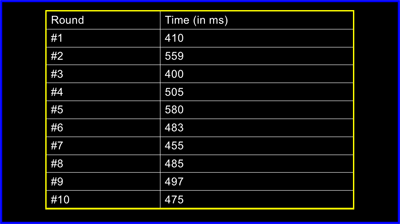
The reaction test goes like this: after clicking ‘start the test’ ten random items appear, either a small image or a sound. You then need to press the spacebar as fast as you can. After the test is over a scorecard appears with your reaction times in miliseconds.
The application should work in Firefox, Opera, Safari and Chrome. I haven’t tested it in some other browsers (*cough* Internet Explorer), so if it doesn’t work try Firefox.
Het waren vandaag weer algemene beschouwingen. En dan kun je er zeker van zijn dat je in ieder geval bij één kamerlid kan lachen, en dat is natuurlijk Geert Wilders. Zijn toespraak tijdens de algemene beschouwingen was wederom een klassiek voorbeeld van Wilderiaanse moslimhaat, xenofobie en plat populisme.
Geweldig materiaal natuurlijk voor mijn Wilders citaten generator! Daar zitten nu twee keer zoveel zinsdelen in zodat er meer dan 9,063,040 combinaties mogelijk zijn. Want in zijn toespraak zaten weer werkelijk een paar pareltjes:
Maar ze gingen toch linksaf. Omdat hun ideologische TomTommetje al sinds de sixties staat afgesteld op ‘linksaf’.
De enige route die de PvdA voorstelt is om een paar extra rondjes te rijden op de grachtengordel.
Goed nieuws voor het CDA. C-D-A, dat inmiddels staat voor Christenen Dienen Allah.
Als onze nieuwe Nederlanders zo graag hun liefde voor die zevende-eeuwse woestijnideologie willen tonen, doe het maar lekker in een islamitische land, maar niet hier, niet in ons land.
Creative Commons published a report yesterday about how people interpret the term ‘non-commercial’ in someof theirlicenses. Interesting stuff, because the term ‘non-commercial’ is a pretty ambiguous one, that can lead to fierce debates within the free culture and open source movements.
It’s a difficult question, but it might have something to do with the nature of the work.
The main problem with NC-licenses is the ambiguity of the term ‘non-commercial’ when reusing content. The CC-research has shown that the interpretation of ‘NC’ is pretty much the same with both users and creators, even around the globe. However, that doesn’t really resolve the issue of ambiguity, as re-stating the definition in the license itself, or creating more licenses has been shown in this report to be a bad idea.
That isn’t as big a problem for individual creators though. Reuse of media will probably stay within the ‘personal use’ or ‘redistribute’ limits, and the NC license mostly touches upon all cases where people might make money from the content in a commercial way. Modifications to the original media are not very common.
This isn’t the case however with a project like Wikipedia, where mass collaboration is the basis of the medium and it is really inherent to creating content. Any ambiguity on how ‘non-commercial’ should be interpreted is likely to much more of a problem than with works created by an individual.
That’s why it’s so important, for projects like Wikipedia, to use a license such as BY-SA that it usable by anyone, at anytime, for any purpose without that ambiguity.
Dat wazig iPhone-fotootje hierboven is van het prullenbakje in de heringerichte treinen die sinds een tijdje tussen Utrecht en Rotterdam / Den Haag rijden. Dat kleine, onschuldig ogende prullenbakje richt nogal wat ellende aan: het zit aan de achterkant van de stoelen, precies in het midden. En dat is precies de plek waar normaal gesproken je benen zitten als je in de trein zit. Het prullenbakje is gemaakt van hard metaal, dus elke keer als je een foute beweging maakt kom je met je knie tegen het harde metaal aan en heb je een blauwe plek.
Als je twee stoelen voor jezelf hebt kun je nog wel een klein beetje je benen handig neerzetten, maar als je met z’n tweeën zit ben je eigenlijk continu bezig om niet tegen het harde metaal aan te beuken als de trein een scherpe bocht neemt.
Dat dit door de testfase van de nieuwe inrichting is gekomen is onbegrijpelijk. Nieuwe inrichtingen worden compleet, op schaal, nagebouwd dus het is onmogelijk dat mensen dit niet eerder hebben gemerkt. Verder is het prullenbakje zo klein dat er nauwelijks iets inpast, dus je vraagt je af of ze het niet beter helemaal weg hadden kunnen laten.
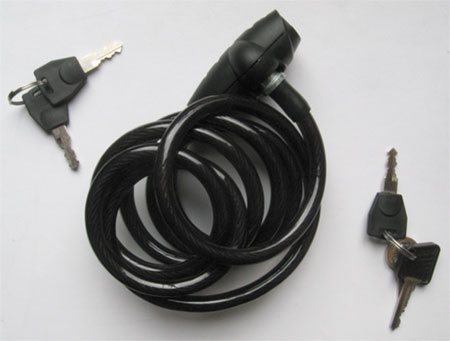
Ik moest een nieuw fietsslot hebben, omdat de oude door iemand was doorgeknipt. Omdat ik best tevreden was met mijn oude van de HEMA (een spiraalslot van 7,95) besloot ik dezelfde weer te kopen.
Het oude sleuteltje had ik nog. Dus ik dacht: het zou toch niet zo zijn dat ik mijn nieuwe slot met mijn oude sleuteltje kan openmaken?
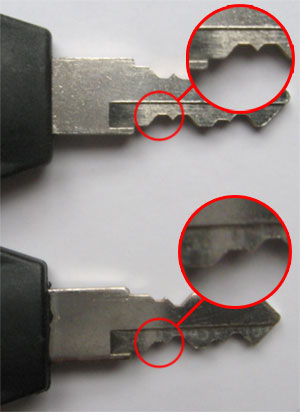
Het sleuteltje paste als gegoten. Met een klein beetje wrikken kreeg ik het slot zo open. Toen ik de baarden bekeek van de twee sleuteltjes snapte ik ook waarom:
Het verschil tussen de beide sleuteltjes is maar één klein tandje.
Nou is de vraag: is dit toeval? Of: verschillen de sleutels zo weinig van elkaar dat je met een willekeurig sleuteltje voor dit type slot al die sloten kan openmaken? Dat zou niet zo mooi zijn, want dan kan iedereen voor slechts 8 euro een heleboel mooie fietsen stelen, zonder dat iemand dat in de gaten heeft…
Het is bijna net zo slecht als de eikelsite en de kuddesite, het hiphopnummer wat is opgenomen om de OV-chipkaart te promoten. Je kunt je niet voorstellen dat iemand bedacht heeft dat dit een goed idee zou zijn. Ja hoor, de jeugd vindt dit vast heel ‘chill’ en ‘gangstah’ omdat ze nu opeens in hun ‘eigen taal’ worden aangesproken:
Een van de weinige keren dat commentaar op YouTube beter is dan het filmpje.